Largest Contentful Paint: What Even Is LCP? (And Why Should You Care?)
By The bee2.io Engineering Team at bee2.io LLC
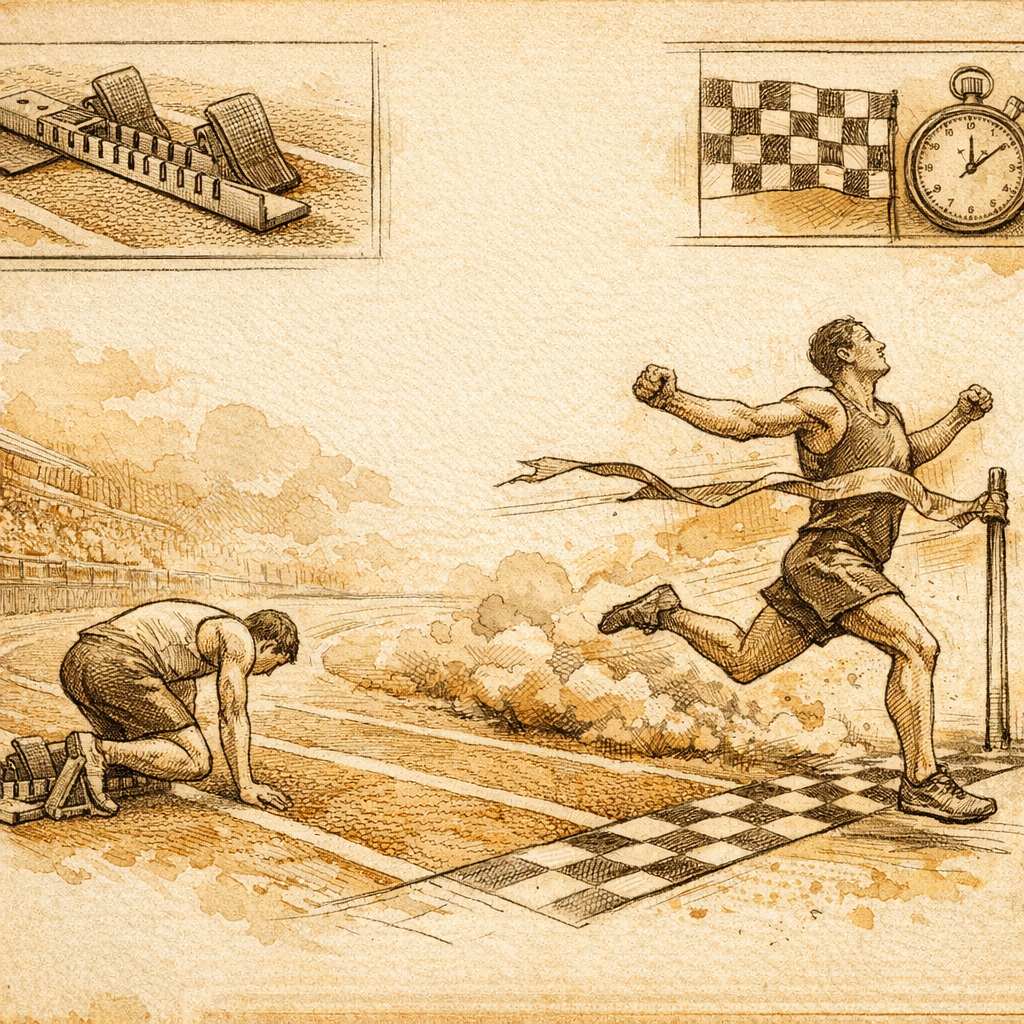
Your website has approximately 2.6 seconds to convince someone you're not a scam before they bounce harder than a rubber ball in a squash court. That's not a guess. That's Largest Contentful Paint (LCP), and it's basically the bouncer at the club of user experience, deciding who gets to stay and who gets yeeted back to Google's search results.
If you've never heard of LCP before, congratulations - you're about to learn why your traffic metrics look like a sad downward chart that would make a financial advisor weep. Let's fix that.
What Even Is LCP? (And Why Should You Care?)
Largest Contentful Paint measures how long it takes for the biggest, most important thing on your page to actually show up. That could be a hero image, a headline, a video thumbnail - basically whatever makes users think "okay, something happened, this isn't completely broken."
Google decided this matters enough to make it a Core Web Vital, which is their fancy way of saying "we're literally grading your website on this, and bad grades mean lower rankings." It's like your website is back in elementary school and Google is the teacher who actually writes comments on your report card.
Here's the magic number: 2.5 seconds or less. That's the threshold between "user stays" and "user ragequits and leaves a one-star review." Industry data shows that sites hitting this target see roughly 24% better engagement than their sluggish counterparts. Meanwhile, pages exceeding 4 seconds watch their visitors vanish like they're being beamed up by an alien spaceship.
The kicker? Your competitors are probably already optimized for this. So either you join them in the fast lane or you become a cautionary tale in their case studies.
Why 2.5 Seconds Is Basically an Eternity (And Not in a Good Way)
Human attention span on the web is a delicate ecosystem. Studies show that after 3 seconds of waiting, bounce rates spike dramatically - we're talking the kind of increase that makes business owners start stress-eating office snacks.
But here's the psychological twist: it's not actually about the time itself. It's about the perception of abandonment. When your LCP is sluggish, users assume your server is having an existential crisis. They don't think "oh, the developer chose to prioritize artistic integrity." They think "this site is broken" and proceed to the next search result.
A major e-commerce platform discovered they were losing approximately 7% of conversions for every additional second of LCP delay. Do the math on that across a year and you're looking at revenue that could fund a small country's snack budget.
The Greatest Hits: LCP Killers and How to Murder Them Back
Most LCP problems fall into three categories, and they're fixable. Revolutionary, I know.
The Server's Having a Bad Day
If your server is slow to respond, nothing else matters - your content is stuck in traffic before it even starts rendering. Upgrade your hosting, implement caching, or use a CDN. Think of it as giving your server an espresso before a big presentation.
The CSS and JavaScript Blues
Massive CSS files and render-blocking JavaScript are like asking someone to wait while you alphabetize your entire sock drawer before they can enter your house. Minify your code, defer non-critical JavaScript, and inline critical CSS. Your page will load faster than your neighbor's surprised reaction when you finally paint your garage.
The Image Problem (aka "Why Is This JPEG Larger Than My Apartment?")
Unoptimized images are the silent killer of LCP. Compress them, use modern formats like WebP, and implement lazy loading for below-the-fold content. An image that's actually visible should be optimized like your life depends on it. Because, metaphorically, it does.
Pro tip: Use image CDNs that auto-format and compress. Your LCP metrics will thank you, and you'll get to feel smug at dinner parties.
The Action Plan
Stop reading blog posts (well, after this one) and actually audit your site. Use tools like Google PageSpeed Insights or Lighthouse to see your current LCP score. If it's above 2.5 seconds, you've got work to do. If it's below 2.5 seconds, congratulations - you're winning at the web development game, which is frankly harder than it sounds.
The best part? Once you fix LCP, you'll probably notice improvements everywhere else too. SEO rankings improve. Users stick around longer. Your bounce rate stops looking like a horror movie.
Don't let LCP be the thing that kills your site's potential. Check your metrics this week. Your future self (and your analytics dashboard) will be grateful.
Disclaimer: This article is for informational purposes only and does not constitute legal, professional, or compliance advice. SCOUTb2 is an automated scanning tool that helps identify common issues but does not guarantee full compliance with any standard or regulation.
Stop finding issues manually
SCOUTb2 scans your entire site for accessibility, performance, and SEO problems automatically.