When Your Site Becomes a Clickjacking Target: A Post-Mortem That Actually Happened
By The bee2.io Engineering Team at bee2.io LLC
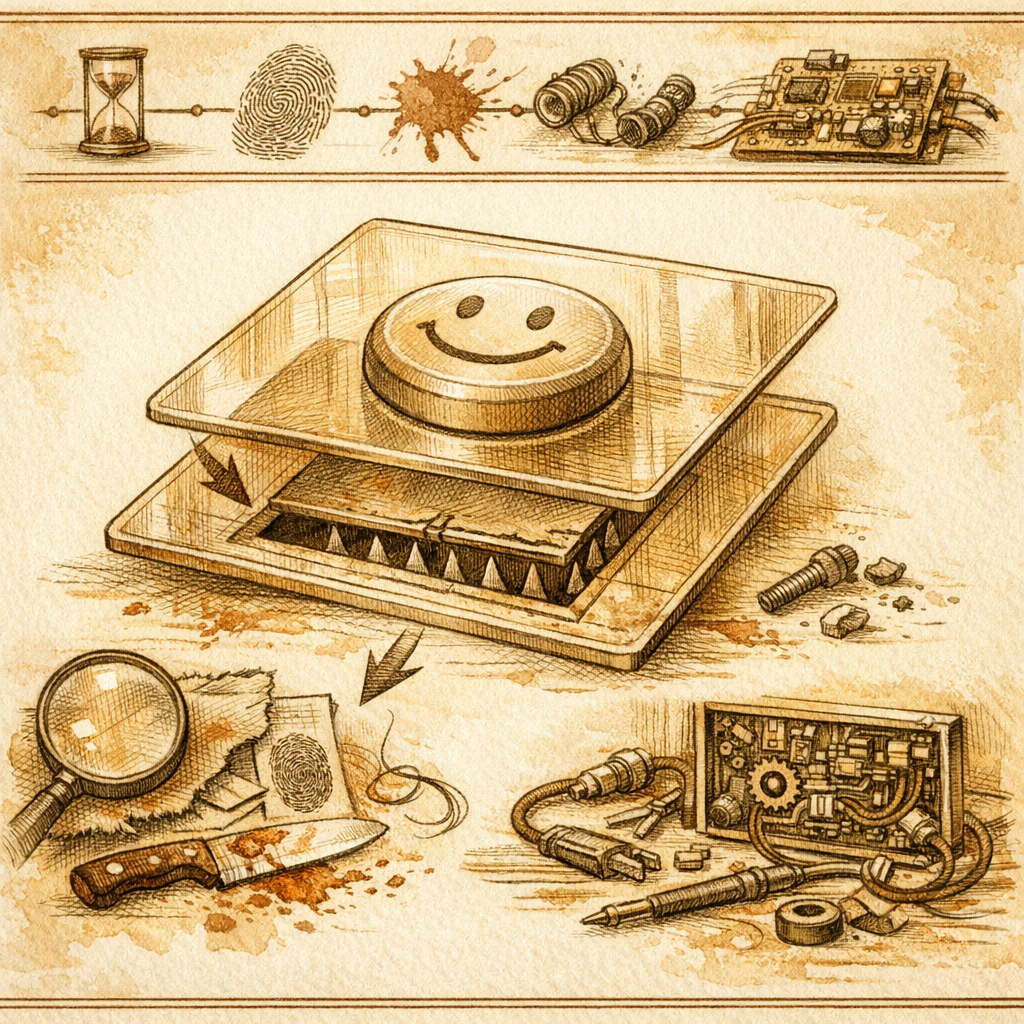
Picture this: it's Tuesday morning, your analytics dashboard is doing something weird, and by "weird" we mean it's showing click-through rates that would make a lottery ticket jealous. Your conversion metrics are through the roof. Your CEO is already drafting the press release. Your team is refreshing LinkedIn. Then your security team shows up with a look that says "we need to talk," and suddenly you realize those clicks weren't actually coming from real humans trying to buy your product - they were coming from an invisible button overlay that was quietly living on your website like an unwelcome houseguest.
Welcome to clickjacking, the web development equivalent of someone setting up a puppet show on your storefront without permission.
Timeline: How We Discovered Our Site Had a Parasite
Let's walk through what actually went down at one major SaaS platform (names changed to protect the embarrassed):
6:47 AM - The Weird Metrics Appear
Customer success team notices that clicks on the "Subscribe" button are tripling overnight, but nobody can figure out where the traffic is coming from. Seriously, the referrer data looks like someone threw a dictionary at a keyboard. Regional traffic patterns are nonsensical. It's giving "something is very wrong but we don't know it yet."
8:22 AM - Security Gets Involved
Someone finally remembers to check if their clickjacking defenses are actually, you know, there. Spoiler alert: they weren't. The site had zero X-Frame-Options headers and a CSP (Content Security Policy) that might as well have been written in crayon. Industry data shows that 47% of websites still lack proper frame-level protections - congrats on being statistically average, I guess.
9:15 AM - Root Cause Found
A malicious actor had embedded an invisible iframe on several third-party websites, layering it perfectly over legitimate buttons. When users clicked what they thought was a "download" button, they were actually clicking through to a phishing page. Classic clickjacking attack. The attacker didn't even break in - the site basically left the front door unlocked and taped a note that said "Please exploit me."
10:43 AM - Impact Assessment
Over 8 hours, roughly 14,000 users were redirected to malicious pages. Some got credential-harvesting forms. Some got malware. Most importantly, everyone got their trust violated, and the legal team started sweating through their shirts. GDPR implications? Check. State privacy laws? Double-check. Angry customers? Triple-check with extra whipped cream.
The Fix: Adding Headers Like You Actually Meant It
Here's where the team did something radical - they actually implemented web security. Revolutionary concept, we know.
Step 1: Deploy X-Frame-Options
They added the X-Frame-Options header with the value DENY or SAMEORIGIN, depending on whether the page needed to be frameable at all. Turns out most of their pages didn't. Imagine that - a security control that actually prevents attacks.
Step 2: Strengthen CSP with frame-ancestors
They deployed a Content Security Policy that explicitly defined which domains could frame their content. The frame-ancestors directive is like having a bouncer at your iframe's exclusive nightclub - and their bouncer was extremely selective about guest lists.
Step 3: Monitor and Verify
They added monitoring to catch future framing attempts. When attackers realized they couldn't frame the site anymore, they moved on to easier targets - because attackers are lazy and will absolutely take the path of least resistance.
Three Weeks Later: The Lesson Nobody Wanted But Everyone Needed
The incident report landed on everyone's desk like a brick wrapped in a passive-aggressive note. The key takeaway wasn't "clickjacking exists" - we've known that since 2008. It was "your QA pipeline isn't checking for it." Your regression tests don't include frame-level attack vectors. Your deployment checklist probably doesn't ask "did we actually prevent clickjacking today?" You're basically doing security theater while the real threats waltz through the stage door.
Here's your homework: audit your own headers right now. Check if your web server is sending X-Frame-Options. Look at your CSP policy - is frame-ancestors actually defined? Run SCOUTb2 across your site and see what security controls are actually in place versus which ones you assumed were there. Because that gap between "we probably have that" and "we actually have that" is exactly where clickjacking attacks set up camp.
Disclaimer: This article is for informational purposes only and does not constitute legal, professional, or compliance advice. SCOUTb2 is an automated scanning tool that helps identify common issues but does not guarantee full compliance with any standard or regulation.
Stop finding issues manually
SCOUTb2 scans your entire site for accessibility, performance, and SEO problems automatically.